

Rain Rot in Horses: Causes, Treatment, and How to Prevent It
Rain rot in horses is a common skin condition that many horse owners deal with, especially during wet and humid seasons. While it may look concerning at first, rain rot in horses is usually treatable and can often be prevented with proper care and management.
Understanding what causes rain rot, how to recognize it early, and the best ways to treat it can help keep your horse comfortable and healthy year-round.
What Is Rain Rot?
Rain rot in horses, also known as dermatophilosis, is a bacterial skin infection that develops when the skin is exposed to prolonged moisture. It typically appears as scabby, crusty lesions along the horse’s back, neck, and hindquarters.
The bacteria responsible for rain rot thrives in damp environments. This is why the condition is most common during rainy weather, muddy turnout conditions, or when horses wear wet or dirty blankets for extended periods.
What Causes Rain Rot in Horses?
The main cause of rain rot is excessive moisture, but several additional factors can increase the risk:
- Continuous rain exposure
- Wet or unclean blankets
- Humid climates
- Poor grooming habits
- Weakened immune system
When a horse’s coat stays wet for too long, the skin’s natural barrier becomes compromised. This allows bacteria to enter and lead to rain rot in horses.
Signs of Rain Rot in Horses
Catching rain rot early makes treatment much easier. Some of the most common signs include:
- Raised scabs or crusty patches on the skin
- Hair loss that comes out in small clumps
- Sensitivity or discomfort when touched
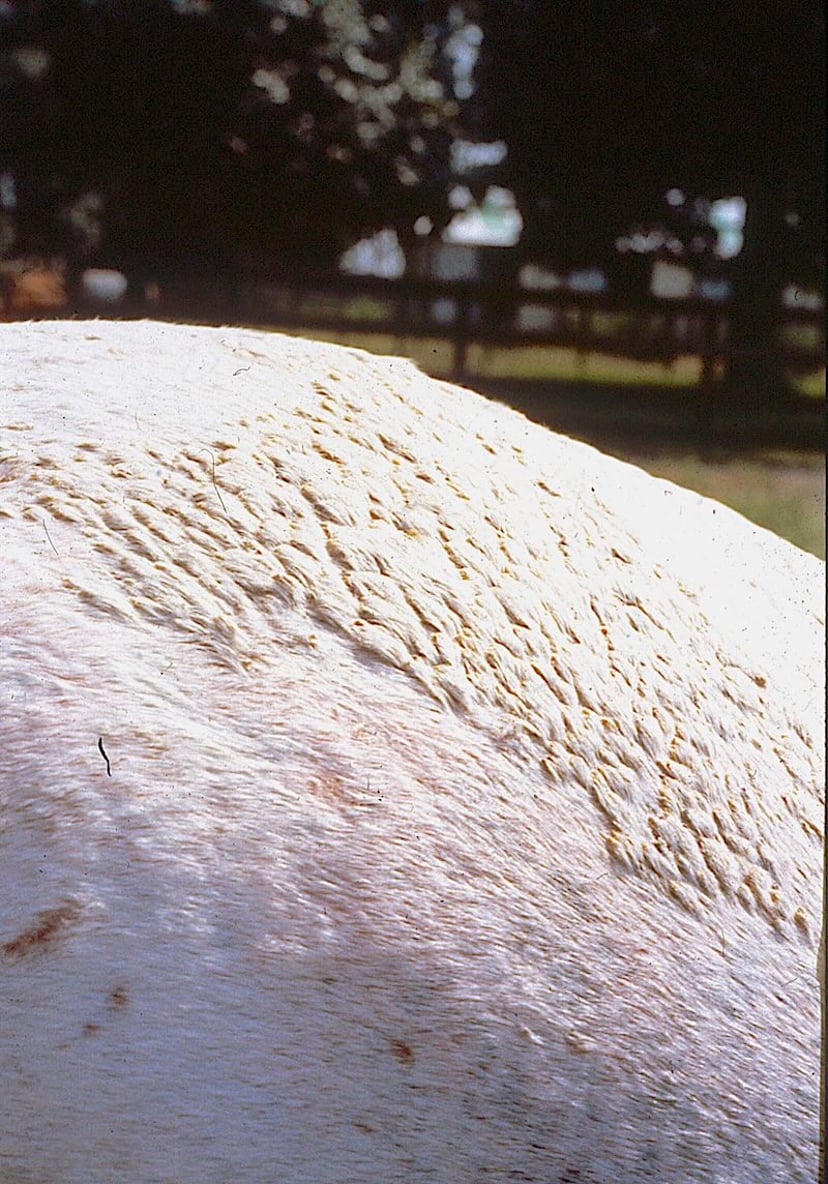
- Matted or tufted hair in affected areas
When scabs are removed, the skin underneath may appear pink, raw, or irritated. In more advanced cases, rain rot in horses can spread across larger areas if left untreated.
The image below from Merck Veterinary Manual gives a good example of what most rain rots look like.
How to Treat Rain Rot in Horses
Treating rain rot in horses involves removing moisture, cleaning the affected area, and applying antibacterial treatments.
1. Keep Your Horse Dry
The first and most important step is eliminating moisture. Bring your horse into a dry area and avoid turnout in wet conditions when possible. Always make sure blankets are clean and completely dry before use.
2. Gently Remove Scabs
Softening and removing scabs helps expose the bacteria underneath so treatments can work effectively. This is often easiest after washing the area with warm water and a mild antibacterial shampoo. Then using a washcloth lightly scrub in a circular pattern, the hair and scabs with start to loosen and come off.
3. Apply a Topical Treatment
There are many treatments available for rain rot in horses, including medicated shampoos and topical solutions. One widely used option, that we can personally attest to, is Shapley’s M-T-G, which helps treat skin conditions while also supporting hair regrowth. When my horse experienced rain rot, I was impressed with how quickly M-T-G oil knocked it out. Many horse owners find it effective for managing rain rot and restoring the coat. You can check it out here: https://amzn.to/4t8ECtz
4. Continue Regular Grooming
Consistent grooming helps remove dirt, moisture, and bacteria from the coat. It also allows you to monitor healing and catch any new areas of rain rot in horses early.
Preventing Rain Rot in Horses
Preventing rain rot is much easier than treating it after it develops. A few simple management practices can make a big difference:
- Provide access to shelter during rain
- Avoid leaving wet blankets on your horse
- Groom regularly to keep the coat clean and dry
- Check your horse frequently during wet seasons
- Maintain overall health to support the immune system
By staying proactive, you can greatly reduce the likelihood of rain rot in horses becoming an issue.
Final Thoughts
Rain rot in horses is a common but manageable condition. With early detection, proper treatment, and good management practices, most cases resolve quickly without long-term issues.
Paying close attention to your horse’s coat, especially during wet weather, is the best way to stay ahead of the problem. With the right care and effective treatments like Shapley’s M-T-G, you can keep your horse comfortable, healthy, and looking their best.

